
Free Music Marketing Guide for Independent Artists With AI Prompts
Content Marketing for Independent Musicians in 2026 offers practical strategies, campaign ideas, platform guidance, planning prompts, and promotional tools for artists working without major-label support. Available as a free download.
United States, 16th Jul 2026 — Independent musicians can release a song worldwide, publish a video, sell merchandise, announce a concert, reach listeners through social media, and communicate directly with fans. The challenge is getting all those activities to support one another.
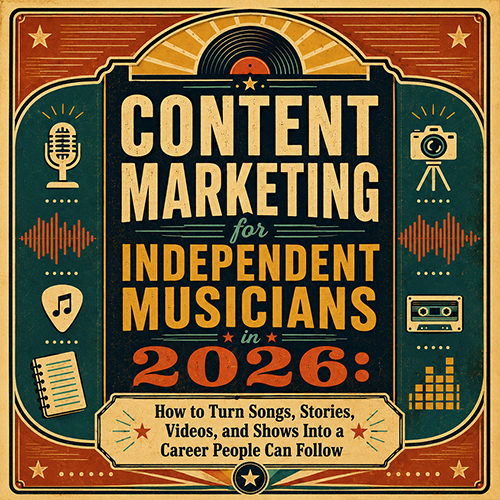
A new guide, Content Marketing for Independent Musicians in 2026: How to Turn Songs, Stories, Videos, and Shows Into a Career People Can Follow, was created to help artists bring their promotional efforts together without adding an unmanageable amount of work.
The complete guide is available as a free download through Gumroad:
Download Content Marketing for Independent Musicians in 2026
Written for independent bands, solo artists, songwriters, managers, publicists, small labels, and music educators, the guide covers the central parts of a modern artist campaign. Topics include websites, social media, Spotify, YouTube, podcasting, email, direct music sales, merchandise, single releases, concert promotion, tour campaigns, content repurposing, search visibility, and AI-assisted planning.
Rather than treating each platform as another separate responsibility, the guide explains how every channel can have a defined role.
An artist website can provide a permanent home for music, videos, photographs, show dates, merchandise, press materials, and contact information. Social media can help listeners become familiar with the artist. Spotify can support discovery and repeat listening. YouTube can serve as a searchable collection of performances, interviews, videos, and other material. Email gives musicians a way to reach supporters without depending entirely on social media algorithms.
When those pieces are connected, fans have an easier time understanding what the artist is doing, what is available, and how they can become more involved.
“Independent artists are constantly told to post more, film more, promote more, and join more platforms,” said writer and editor Rick Mulholland. “The problem is that musicians are rarely shown how those activities should work together. This guide is meant to help artists build a realistic system around the music they are already creating.”
Replacing Random Posting With a Clearer Process
Many independent musicians are balancing promotion with songwriting, recording, rehearsals, employment, family responsibilities, travel, and live performances.
At the same time, they may feel pressure to post daily, create short videos, maintain several social accounts, start a newsletter, update streaming profiles, pitch playlists, sell merchandise, contact the media, and promote every show.
That workload can quickly become difficult to maintain.
Content Marketing for Independent Musicians in 2026 encourages artists to move away from disconnected posting and instead begin with a central story, release, performance, or project.
That material can then be adapted for several uses.
A detailed artist interview may become:
- A website article
- A podcast episode
- A YouTube video
- An email newsletter
- A media pitch
- Several short social videos
- A collection of quotations or graphics
A live performance may support:
- A concert announcement
- A tour campaign
- A YouTube upload
- A short-form video
- A website feature
- An email update
- A streaming reminder
The guide does not recommend copying and pasting the exact same message across every platform. Instead, it shows artists how to retain the central story while adjusting the length, format, and presentation for each audience.
A Longer Approach to Promoting New Music
One of the guide’s main sections focuses on helping musicians promote a new single beyond release day.
Many independent campaigns place most of their attention on the day a song becomes available. The artist posts the cover artwork, shares a streaming link, receives support from friends, and then moves on within a few days.
That approach gives the music only a small window in which to reach listeners.
The guide recommends treating a release as an extended story.
Before the release, artists may introduce the song through:
- Cover artwork
- Lyrics
- Rehearsal footage
- Studio clips
- Early demos
- Songwriting stories
- Production details
- Short video teasers
- Presave or preorder links
- Interviews
- Podcast appearances
After the song is released, promotion can continue with:
- Live performances
- Acoustic versions
- Lyric explanations
- Recording stories
- Production breakdowns
- Fan questions
- Press coverage
- Listener reactions
- Connections to earlier songs
- Alternate videos or visualizers
The guide’s approach recognizes that a song remains new to anyone who has not heard it. Extending the campaign gives the release more opportunities to reach people without requiring the artist to invent an entirely new subject every day.
Separate Strategies for Concerts and Tours
The guide also distinguishes between promoting one concert and promoting a complete tour.
A show flyer provides useful information, but repeatedly posting the same image does not always give people a reason to attend.
Artists can strengthen a concert campaign by discussing what makes that appearance different. The story may involve:
- A special guest
- A hometown performance
- An unreleased song
- A meaningful venue
- A release celebration
- A rare acoustic set
- A supporting artist
- Limited merchandise
Tour promotion requires a broader announcement, but each city also needs its own message.
A fan in one location is usually more interested in the nearby date than the entire tour route. The guide recommends supporting the main tour announcement with city-specific videos, venue information, local media outreach, supporting-act introductions, email reminders, radio contacts, travel updates, ticket information, merchandise previews, and post-show recaps.
This approach turns a tour into a collection of local campaigns rather than one graphic shared repeatedly.
Spotify, YouTube, Bandcamp, and Direct Fan Support
Streaming platforms are covered as part of the artist’s larger career, not as the only measure of progress.
The guide includes recommendations for reviewing and updating Spotify profiles before a release. Artists are encouraged to check their biography, profile image, Artist Pick, merchandise, Canvas visuals, concert listings, and release information.
It also discusses Spotify listener data and how artists may use it to identify songs, cities, and promotional efforts that deserve more attention.
Musicians are warned to be cautious with companies promising guaranteed streams, instant growth, or unexplained playlist placement. A large number on a dashboard does not always represent real listeners or meaningful interest.
YouTube is presented as more than a place for official music videos. An artist’s channel can also include:
- Live performances
- Interviews
- Rehearsal footage
- Lyric videos
- Studio documentaries
- Tour diaries
- Podcasts
- Short-form clips
- Song explanations
Direct sales receive significant attention throughout the guide.
Independent artists may offer digital downloads, vinyl records, CDs, cassettes, signed editions, shirts, posters, bundles, memberships, tickets, and other items through their own stores or platforms such as Bandcamp.
The guide does not present streaming and direct purchases as competing choices. Streaming makes music easy to discover and revisit. Direct purchases give fans another way to support the artist and own something connected to the music.
Artists are also encouraged to explain that difference without criticizing listeners who primarily use streaming services.
Using AI Without Losing the Artist’s Voice
Content Marketing for Independent Musicians in 2026 also examines the growing use of artificial intelligence in music promotion.
AI tools can help musicians develop outlines, organize campaign ideas, create checklists, prepare interview questions, compare headlines, plan calendars, edit existing material, and adapt longer content for different platforms.
The guide does not recommend allowing automated tools to replace the artist’s experiences, opinions, humor, or personality.
Strong artist content still depends on details that only the musician can provide.
Those details may include the real story behind a lyric, a problem during recording, a last-minute arrangement change, a memorable concert, a fan conversation, a local reference, a private joke, or an opinion based on years of experience.
AI may help organize those details, but it cannot create the lived experience behind them.
The guide includes detailed prompts designed to help artists begin projects with clearer instructions. Musicians can add information about their genre, audience, goals, songs, schedule, budget, available time, upcoming shows, and current campaign.
What the Free Guide Includes
Content Marketing for Independent Musicians in 2026 includes:
- A detailed music content marketing framework
- Artist website planning recommendations
- Social media content categories
- Short-form and long-form video ideas
- Podcast planning guidance
- Spotify profile and release preparation
- Direct-to-fan sales strategies
- Single-release campaign structures
- Individual concert promotion
- City-by-city tour promotion
- Content repurposing methods
- Search visibility guidance
- AI-assisted workflow suggestions
- Artist marketing audits
- Detailed planning prompts
- Frequently asked questions
- Recommended tools and equipment
- Platform and music-industry resources
Artists do not need to use every section at once. They can begin with the chapter that addresses their immediate need, such as preparing a single, improving a website, planning a concert campaign, updating a Spotify profile, or organizing a tour.
Why the Complete Guide Is Free
Independent musicians already spend money on instruments, recording, rehearsal space, distribution, transportation, website hosting, merchandise, photography, videos, advertising, and live performances.
Even a reasonably priced marketing resource becomes another expense.
Making the guide free allows artists to use the material without deciding whether another purchase fits the budget. It also makes the resource easier to share with bandmates, managers, students, collaborators, and other musicians.
The Gumroad download is the complete guide. It is not a sample, shortened edition, or preview with important chapters removed.
Download the Free Music Marketing Guide
Content Marketing for Independent Musicians in 2026: How to Turn Songs, Stories, Videos, and Shows Into a Career People Can Follow is available now as a free Gumroad download.
Artists can read the guide from beginning to end or use individual sections while planning releases, concerts, tours, videos, websites, and direct-to-fan campaigns.
Download the complete 2026 Independent Music Marketing Guide free on Gumroad
About Rick Mulholland
Rick Mulholland is a writer, editor, and content creator whose work covers independent music, artist marketing, digital publishing, consumer products, travel, jewelry, and online media.
His music marketing resources are designed to help independent artists organize promotion, communicate more clearly, and develop campaigns they can realistically maintain while continuing to write, record, rehearse, and perform.
Guide: Content Marketing for Independent Musicians in 2026: How to Turn Songs, Stories, Videos, and Shows Into a Career People Can Follow
Availability: Free digital download
Download: https://rickmulholland.gumroad.com/l/free-music-marketing-guide
Media Contact
Organization: Gadgets Food and Travel
Contact Person: Richard Mulholland
Website: https://www.gadgetsfoodandtravel.com/
Email: Send Email
Country:United States
Release id:47179
The post Free Music Marketing Guide for Independent Artists With AI Prompts appeared first on King Newswire. This content is provided by a third-party source.. King Newswire makes no warranties or representations in connection with it. King Newswire is a press release distribution agency and does not endorse or verify the claims made in this release. If you have any complaints or copyright concerns related to this article, please contact the company listed in the ‘Media Contact’ section
Disclaimer: The views, suggestions, and opinions expressed here are the sole responsibility of the experts. No Funds Trend journalist was involved in the writing and production of this article.

